Fun is not optional for us as Black men; it is part of how we heal, regulate our emotions, and stay balanced.Fellas, let me ask you a real question:**What do YOU do for fun?** Not what you do because you’re a good father, a solid partner, or a responsible man of God—but what you do that actually feels fun to *you*.A lot of us blur the line between duty and joy. We show up for our kids, our families, our churches, and our communities because we are leaders, providers, and protectors. But if we’re honest, being present doesn’t always mean we’re actually having fun. Sometimes we’re serving, but we’re not enjoying. Sometimes we’re in the room, but our spirit is still heavy.Fun is different.Fun is where your body can finally exhale, your mind gets a break, and your emotions get room to breathe. Consistent, enjoyable downtime has been shown to lower stress, lift mood, and help people bounce back from everyday pressure and trauma. For Black men who carry unspoken expectations, racial stress, and the pressure to “always be strong,” that kind of joy is not childish—it’s **therapy** in motion. So in this space, let’s keep it honest and specific:- What actually makes you laugh out loud?- What helps you lose track of time in a *good* way?- What would you still do even if nobody thanked you, praised you, or posted it online?Drop ONE thing that is **pure fun** for you—not for your kids, not for your family, not for your job—for YOU.No judgment. No shaming. Just brothers naming what joy looks like for them, so we’re not only carrying weight—we’re also creating room for rest, play, and emotional balance. God is not against men having fun; He is the One who actually *gives* us good things to enjoy. The verse says He “gives us richly all things to enjoy,” and that’s the part I want to sit with. Brothers, that means healthy fun is not some side piece to the Christian life—it is part of God’s design for us as men. He is a generous Father, and He’s not just giving us responsibilities; He’s also giving us moments, spaces, and activities that let our souls breathe and our hearts lighten up. So when I ask, “What do you men do for fun?” I’m not asking you to be less spiritual. I’m asking if you are actually receiving what God is already offering. Are you only carrying weight, or are you also receiving joy? Are you only showing up as a leader, or are you also letting God lead you into things that make you laugh, relax, and feel alive? I want you to think about one thing you do that is pure fun for you—not a duty, not a performance, not “being a good dad” or “being a good man,” but something that feels like a gift from God to your own heart. That’s where this verse gets real: the same God who saved you also wants you emotionally and mentally healthy, and part of that is learning how to enjoy what He’s given you.

1 Corinthians 13:9, 12 ESV[9] For we know in part and we prophesy in part, [12] For now we see in a mirror dimly, but then face to face. Now I know in part; then I shall know fully, even as I have been fully known.Are you studious, glory to YHWH. You should be the WORD is the blueprint and lighthouse for your life. Are you a prayer warrior, you should be. Agape has an intimate, communicative component.Whatever we think we are good, gifted, equipped at in the KINGDOM I want us to wrap our minds around what I stated in the first two sentences “We Should Be.”I have a history of being Justice involved I remember after I completed my incarceration time and returned back to society, started attending a local congregation and would hear many people ask me what Seminary had I been to. The reason they would ask this because in their observation I was well-versed in description. However I remember being asked that very question one time and reflecting on the fact that in ancient times one of the rights of passages for young Hebrew boy was he becomes obligated in all commandments, and it’s customary for him to read the weekly Torah portion (Parashah) and sometimes the Haftarah (Prophetic reading) for the service, which can range from a few verses (maftir) to the entire portion, depending on skill and tradition, with the main focus being on his newfound adult religious responsibility. His maturity to be able to do such things fit within the context of the growth of the entire nationIt was not a personal accomplishment to be celebrated like obtaining a degreeThe young man would be looked at as mature enough to play “A Part” in the nation.” The young persons transition and maturity was never a solo mission. Again it was in line with the goal of the Nation. Historical bar mitzvah and communityClassically, “bar mitzvah” means a boy has reached the age at which he is legally obligated in the commandments; the status is communal and covenantal, not a modern-style diploma. The public ritual developed to mark this—being called to the Torah, giving a teaching, and joining the minyan—signals recognition that he can now carry a share of the community’s spiritual work, “a part in the nation,” not just personal success. Mentors, tutors, and nation-buildingTraditional and contemporary practice both assume that a young person does not reach this point alone but is formed by parents, elders, and specific teachers or tutors who guide them into Torah, prayer, and mitzvot. Many modern Jewish educators explicitly recover this as a mentorship model, stressing that bar/bat mitzvah preparation should train youth for lifelong service to God and community, echoing your emphasis that their maturity belongs to the people’s growth, not to individual glory. Eli’s role with SamuelHannah dedicates Samuel to YHWH at Shiloh, and Eli, as high priest and judge, becomes responsible for Samuel’s spiritual formation and service in the tabernacle. Under Eli’s oversight, “the boy Samuel” ministers before the Lord and grows in favor with God and people, signaling an intentional apprenticeship context. Classic picture of mentorshipWhen Samuel first hears God’s voice, he assumes it is Eli; Eli eventually discerns that YHWH is calling the boy and coaches him in how to respond, which is a classic act of mentoring. Many scholars and teachers therefore explicitly describe Eli as Samuel’s mentor, noting that Eli trains the very prophet who will lead Israel into a new era and anoint its first kings. My PointYHWH through the SPIRIT of YESHUA 1 Corinthians 12:4 ESV[4] Now there are varieties of gifts, but the same Spirit; Ephesians 4:8 ESV[8] Therefore it says, “When he ascended on high he led a host of captives, and he gave gifts to men.”I’ve encountered many gifted men and women some have a mindset that their gifting has made them superior. Whether it be a result of tongue speaking, receiving revelation, commitment to prayer etc. Many have allowed themselves to be deceived much like satan who looked at himself instead of HE who created and gifted him1 Corinthians 12:4 ESV[4] Now there are varieties of gifts, but the same Spirit; One spirit gifted us all. Why? Ephesians 4:11-13 ESV[11] And HE gave the apostles, the prophets, the evangelists, the shepherds and teachers, [12] to equip the saints for the work of ministry, for building up the body of CHRIST, [13] until we all attain to the unity of the faith and of the knowledge of the SON of GOD, to mature manhood, to the measure of the stature of the fullness of CHRIST Every gift and office requires growth. Even Samuel had Eli. Hence 1 Cor 12:27-31 Eph 4:11Having a particular gift is not enough. No matter how much one prays, prophesys, teaches etcIt’s safe to say that Apostle Paul may be our greatest model for living outside of YESHUA Who can say they’ve met someone with such an anointing yet even he was humbled when he began to exalt himself above measure 2 Corinthians 12:7 ESV[7] So to keep me from becoming conceited because of the surpassing greatness of the revelations, a thorn was given me in the flesh, a messenger of Satan to harass me, to keep me from becoming conceited. We Know in Part.Don’t exalt yourself. Don’t think because you’ve received a revelation that you don’t need a leader. Don’t think because you have a healthy prayer life that you are intimately superior. We all were given gifts. We didn’t obtain them, they were given. They are not for yourself. As a matter of fact as  A Believer you are not Born Again simply for yourself. 1 Corinthians 6:20 ESV[20] for you were bought with a price. So glorify God in your body.1 Corinthians 7:23 ESV[23] You were bought with a price; do not become bondservants of men.

Men, Marriage, Identity

Ephesians 5:22-27

We reflect what we behold/ spend time with
2 Corinthians 3:16-18 ESV
[16] But when one turns to the Lord, the veil is removed. [17] Now the Lord is the Spirit, and where the Spirit of the Lord is, there is freedom. [18] And we all, with unveiled face, beholding the glory of the Lord, are being transformed into the same image from one degree of glory to another. For this comes from the Lord who is the Spirit.


If we look at the context of these verses the Weight primarily is laid upon the husband as the Weight primarily is laid upon YESHUA

As the Body should submit to YESHUA because HE has proven HIMSELF to be worthy of submission so should the husband
YESHUA does not make it difficult as a husband submits to YESHUA a wife won’t find it difficult

What KINGDOM wife would not want to willingly submit Ephesians 5:26-27 ESV
[26] that he might sanctify her, having cleansed her by the washing of water with the word, [27] so that he might present the church to himself in splendor, without spot or wrinkle or any such thing, that she might be holy and without blemish

Such operation for a husband takes a cross life


Something to ponder from CS Lewis…”Every Christian would agree that a man’s (woman’s) spiritual health is exactly proportional to his love for GOD.”

Amen?

Had a brother tell me Mike there are no loop holes to loving GOD

The evidence is your obedience
Your maturity is an expression of your love and dependence on YESHUA
We say we live out the two greatest commandments then YESHUA drew the line, “Love Other’s As I Have Loved You!!!!”


Do you love HIM?


Here’s a Watchman Nee quote that beautifully complements C.S. Lewis’s statement about love for God and spiritual health:“Actually, only God can satisfy a Christian’s heart; man cannot. The failure of many is to seek from man what can be found only in God. All human affection is empty; the love of God alone is able to fully satisfy one’s desire. The moment a Christian seeks a love outside God his spiritual life immediately falls.” — Watchman Nee, The Spiritual Man

YHWHS  Justice

Biblical prophets closely link God’s justice to national repentance by calling nations—especially Israel—to turn from injustice, oppression, and idolatry, promising restoration or mercy if they do. If nations refuse to heed these calls, the prophets announce God’s just judgment as inevitable. This theme is central throughout the prophetic books.Prophets’ Call to Repentance and JusticeProphets such as Jeremiah, Amos, Micah, and Isaiah continually warn that injustice, corruption, oppression of the poor, and idolatry will bring God’s judgment���. However, these warnings are always paired with an offer: if the nation genuinely repents, changes its ways, and practices justice, God will relent from disaster and restore blessing. Jeremiah 18:8, for example, reveals God’s readiness to “change His mind” about disaster if a nation repents: “But if that nation I warned turns from its evil, then I will relent and not inflict on it the disaster I had planned”��.Specific ExamplesJeremiah: Calls Judah to repent from injustice and warns that God’s judgment will come if they do not; promises return from exile if they repent��.Amos: Condemns social injustice—mistreatment of the poor, corruption, and empty ritual—and urges the people to “let justice roll down like waters” (Amos 5:24)��.Micah: Sums up God’s requirements as “to do justice, to love kindness, and to walk humbly with your God” (Micah 6:8); links the lack of justice to impending judgment, but also points to hope for those who return to God��.Jonah: Even Nineveh, a pagan nation, is spared when it repents in response to Jonah’s preaching—illustrating that God’s justice is given to all, but so is the opportunity for mercy through repentance��.Justice and Repentance in the Prophetic MessageFor the prophets, justice is not optional—it is inseparable from the call to repentance. They insist that true repentance is seen in how a nation treats the vulnerable and whether it turns from evil. If not, judgment will be just, but if so, God is always willing to forgive and restore, emphasizing His character as both just and merciful���.In summary, biblical prophets present God’s justice and the hope of national repentance as intertwined: prophetic calls warn of judgment but always point to the possibility of renewal if a nation humbles itself and pursues justice���.

Called to Warfare


Alllll Son’s of Thunder


prophetic watchman and Kingdom reformer—anointed to confront deception, expose compromise, and call the remnant into holiness. Rooted in righteousness and driven by a burden for Yeshua’s return, he ministers beyond the walls of religion, igniting truth and building up those often overlooked by systems.

He is not confined by pulpits or programs but moves with the Spirit—calling men to awaken, churches to align, and communities to prepare. His calling is not to please man, but to please God. His mantle is not comfort—it is confrontation that leads to correction, healing, and Kingdom restoration.


called by YAH to be a voice in the wilderness, preparing the way of the Lord. I will not be silenced by misunderstanding or discouraged by rejection. I carry divine insight, and I see what others cannot because I am sent to call them into alignment. I walk in truth, love holiness, and labor not for platforms, but for the return of the King. I am not just a man with a message—I am a man with a mantle.

Redemption

From Chains to Change: The Journey of a Black Father Rebuilding Faith, Family, and Purpose
By Michael J. Hall
I wasn’t born broken, but life in Baltimore taught me to be hard before I had a chance to be healed. The streets raised many of us—young, Black, confused—and taught us that emotion was weakness and silence was survival. I became a product of what I didn’t talk about. Anger? Suppressed. Pain? Numbed. Purpose? Undefined.

Eventually, the weight of trauma and choices led me into incarceration. Not just physical imprisonment—but emotional and spiritual confinement. I was a father, but I wasn’t fathering. I was a man, but not yet living in the fullness of manhood. Everything I thought gave me power—reputation, toughness, control—was a mask covering deep wounds.

It was in the darkest nights behind bars that I first heard the whisper: “You were made for more.” Not from a preacher, but from the voice inside me that I tried to kill with distraction. That voice? It was Yeshua. Calling me into the truth.

When I stepped out of prison, I wasn’t free. I had to *learn* how to be free. Not just from bars—but from bitterness. From shame. From the lies of who I thought I was supposed to be. That’s when healing began.

My healing wasn’t instant. It came through tears. Through trying to rebuild broken relationships with my daughters. Through confronting how I failed them and asking Yeshua to show me how to become the father I was meant to be.

That pain birthed purpose. I founded *Be-More Alive Ministries* not just to preach, but to *walk with* men who carry the same silent burdens I once did. Men returning from prison. Fathers trying to reconnect. Brothers caught between the streets and spirituality.

Through mentorship, biblical truth, fatherhood programs, and raw conversations, I began to witness what grace looks like: when God rewrites your story even while the ink is still wet from your mistakes.

Now, as a husband, father, and chaplain, I lead programs like *Freedom Amplified*, *The Warrior’s Path*, and *Faith Family Foundation*—platforms not just built on theory, but lived experience. My business, *Washed by The Water LLC*, isn’t just about cleaning houses—it’s about offering returning citizens a fresh start and sustainable work.

Every man I meet, I see a piece of who I used to be. I don’t lead from a place of perfection—I lead from my scars. That’s where the power is. Because trials don’t disqualify you. They train you.

I once believed my story was too broken to be used. Now, I see that my story *is* the tool. And in the hands of a faithful Creator, even the most shattered life can become a blueprint for someone else’s breakthrough.

If you’re reading this and you’ve been through the fire—remember: God doesn’t waste pain. Every tribulation can become a testimony when you surrender to the One who never left you.

About the Author
About the Author
Michael J. Hall is a husband, father, chaplain, and founder of Be-More Alive Ministries, a Christ-centered initiative focused on restoring men through identity, fatherhood, reentry support, and emotional healing. He is also the owner of Washed by The Water LLC, a property maintenance business that provides second chances through employment and mentorship for returning citizens. Through lived experience, biblical truth, and relentless compassion, Michael is committed to transforming trials into testimonies for the glory of God.

Connect with Michael Hall
Website: http://www.bemorealive.org
Email: BeMoreAlive828@gmail.com
Phone: 828-216-9077
Instagram: @BeMoreAliveMinistry

Recovery after Incarceration

Recovery After Incarceration: Understanding the Journey
“One year in, two years out” — That’s the general rule many experts use to describe how long it takes to recover after incarceration.
What the Research Says:
– For every 1 year of incarceration, it can take 1 to 2 years of supported, healthy reentry for full recovery — emotionally, socially, and economically.
– Trauma, institutionalization, and loss of autonomy often cause emotional and psychological effects similar to PTSD.
– Family relationships, especially with children and partners, can take years to rebuild.
– Employment and housing stability often take 1–3 years, especially without strong support systems.
Factors That Influence Recovery Time:
• Length of incarceration — longer sentences require deeper recovery.
• Age at release — older individuals may face more challenges.
• History of reoffending — repeated incarceration can reinforce destructive mindsets.
• Access to services — reentry support, therapy, and community help drastically shorten recovery time.
• Type of incarceration — solitary confinement and violent environments deepen trauma.
Focus on the Mindset, Not the Statistic:
Statistics often say that for repeat offenders, or those with violent histories, the outlook is bleak. But for those who have served 10+ years—especially violent offenders—studies show they typically do not reoffend. This group is different. What we will do together is not focus on the statistic, but the mindset that gives the statistic power.
In this group, we will examine the mindsets and behaviors born out of trauma. These patterns may feel normal, but they are not healthy. Together, we will re-educate ourselves, rebuild our emotional toolbox, and change the narrative—proving the statistics wrong, one mindset at a time.

Here is a social media post for your podcast episode titled “Pain and Purpose” featuring Fon Dockery:—NEW PODCAST EPISODETitle: Pain and PurposeHashtag: #FirearmSafetyBe-More Alive Ministries presents a powerful and deeply moving episode of the Be-More Alive Podcast.Guest: Fon Dockery — founder of the Live Like Jenesis ProjectIn this raw and heartfelt conversation, Fon opens up about turning unimaginable pain into purpose following the tragic loss of his daughter, Jenesis Janie Dockery. Together with Kimberly Dockery, their mission is now rooted in love, healing, and advocacy for firearm safety and responsible gun ownership.We talk about:Grief and fatherhoodTurning tragedy into advocacyThe mission of Live Like JenesisPromoting firearm safety in North Carolina and beyondHow to find purpose through painWatch now on YouTube + Facebook.Follow their journey:TikTok: @FonDockery @KimberlyDockeryLearn more: NCSAFE.org | NCDPS.com“Painful but possible.”Let’s honor Jenesis by creating change.—https://photos.app.goo.gl/fF68jfE3mNs1JUUX8

Men, Marijuana and Mental Health PT 1


“Smoke Screens: When Marijuana Becomes the Mask for Men’s Pain”
By Chaplain Michael Hall, Be-More Alive Ministries

In barbershops, on the block, in the quiet of their own homes—more and more men are lighting up. Not always for joy. Not even always for stress. Just… because.

For many men, especially Black men and returning citizens, marijuana has become a silent therapist. A familiar crutch. A way to numb the noise of life without ever having to speak on what’s really going on inside. We’ve been taught that showing emotion makes us weak, that crying is something boys grow out of, and that therapy is for “them,” not us.

So instead of talking, we toke.
Instead of healing, we hide.

Yes, marijuana can be a form of harm reduction in some cases, but when it becomes the only way we cope, we’re not reducing harm—we’re avoiding healing.

This is where mental health becomes spiritual warfare.

Too many men are trying to fight emotional and spiritual battles with smoke and silence. And the enemy knows—if he can keep you numb, he can keep you from purpose. Marijuana may calm the surface, but it doesn’t address the storm inside. That requires something deeper. That requires biblical therapy—truth-based healing that speaks to the spirit and soul.

Psalm 34:18 says, “The Lord is close to the brokenhearted and saves those who are crushed in spirit.” But how can we receive that closeness when we’re constantly trying to quiet our brokenness with weed instead of the Word?

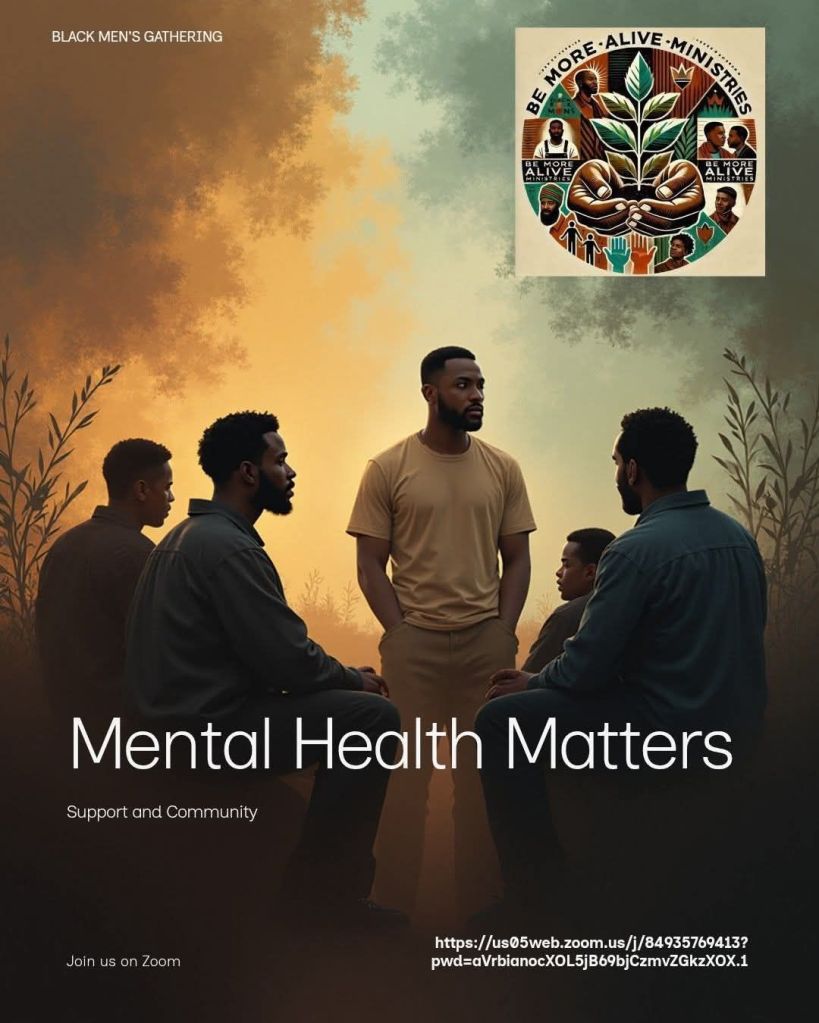
At Be-More Alive Ministries, we believe that healing starts with facing what hurts, not just masking it. Through our programs, groups, and biblical support systems, we walk with men as they break the silence, process their pain, and learn emotional discipline rooted in Christ.

This is more than behavior modification—it’s identity restoration.

Brothers, you don’t have to keep smoking to silence your soul. There is a better way.

Let’s stop medicating what only God can heal.
Let’s choose wholeness over numbness.
Let’s be more alive.

Join us.
For support groups, biblical therapy resources, and one-on-one coaching, visit http://www.bemorealive.org or reach out directly to mike@operationgateway.org.


Generational raising of children

The Wisdom of the Past: Why Older Generations Hold the Key to Rebuilding Mental Resilience

By Michael Hall, Be-More Alive Ministries

Introduction: A Crisis of Anxiety and Identity

We are witnessing an unprecedented crisis in mental health among younger generations. Rates of anxiety, depression, and self-harm have skyrocketed, particularly since the rise of smartphones and social media. According to Jonathan Haidt’s The Anxious Generation, these shifts are not just anecdotal—they are statistical and global.

But here’s the question: Why did older generations, who faced economic hardships, wars, and fewer technological conveniences, report far fewer struggles with anxiety and depression? The answer lies in the structure of their upbringing—their social environment, discipline, and community.

At Be-More Alive Ministries, we believe the solution isn’t just in therapy and medication but in restoring the wisdom and structure that older generations had. It’s time for parents, mentors, and community leaders to reclaim their role in raising resilient, disciplined, and emotionally grounded young people.


The Mental Health Divide: Then vs. Now

Mental health struggles existed in past generations, but not at the levels we see today. In the 1950s through the early 2000s, anxiety and depression were far less common among youth. Compare that to today, where rates of teenage depression and suicide have more than doubled in the last decade.

What changed? Older generations—particularly Baby Boomers and Gen X—grew up in environments that built resilience:

More face-to-face interaction and socialization.

Physical activity and outdoor play without screens.

Strict but loving discipline that instilled respect and responsibility.

Faith-based and community-driven support systems.


Compare that to today, where children and teenagers are spending 7-9 hours a day on screens, consuming social media that distorts reality, breeds comparison, and encourages self-doubt. The digital world has replaced real-world experiences, leaving many young people with no grounding in reality, purpose, or identity.


The Role of Social Media and Technology in Mental Decline

Haidt’s research exposes a direct link between social media use and declining mental health, particularly in girls. Why? Because platforms like Instagram, TikTok, and Snapchat promote:

Unrealistic comparisons that erode self-esteem.

Anxiety-inducing content that feeds fear and hopelessness.

Short attention spans that make focus and discipline difficult.

A lack of real-world consequences, creating entitlement and emotional fragility.


In past generations, bullying happened in person. Conflicts were resolved face-to-face. Today, social media has removed accountability, allowing people to say things they would never say in real life. Worse, many parents are allowing devices to raise their children, outsourcing discipline and engagement to screens.

We now have a generation of digitally connected but emotionally disconnected young people, struggling with purpose, resilience, and confidence.


The Erosion of Parental Authority and the Cost of “Soft” Parenting

Another stark difference between past generations and today is parenting. Older generations emphasized discipline, responsibility, and hardship as part of life. Today’s parenting trends, influenced by “safetyism” and overprotection, have left children ill-equipped to handle real-world struggles.

Parents used to say “Go outside and play”—today, they hand over a tablet.

Discipline used to be firm but loving—today, many parents fear being “too harsh.”

Responsibilities like chores, working early, and contributing to the home were expected—today, many teens lack real-world responsibilities until adulthood.


Haidt argues that this overprotection, combined with social media, has made kids weaker, not stronger. Parents have unintentionally raised a generation that struggles with independence, emotional control, and real-world resilience.

But it’s not too late. The solution lies in intergenerational wisdom.


The Solution: Older Generations Must Lead Again

At Be-More Alive Ministries, we believe that Baby Boomers and Gen X hold a blueprint for resilience, faith, and structure that younger generations desperately need. We need to bring back mentorship, discipline, and faith-based guidance to restore what has been lost.

Here’s how we do it:

1. Reintroduce Intergenerational Mentorship

Older men and women must take on the role of guides, not just elders. Youth need to hear the stories of perseverance, discipline, and faith that past generations lived through. At Be-More Alive Ministries, we integrate this mentorship into reentry programs, youth outreach, and faith-based community work.

2. Restore Parental Authority

Parents must reclaim their role as leaders, not just providers. That means:

Limiting screen time and prioritizing face-to-face engagement.

Instilling responsibility with chores, jobs, and service to the family.

Teaching resilience through challenges, not avoiding them.

Grounding children in faith, showing them a foundation deeper than social media trends.


3. Bring Back the Role of Faith & Community

Older generations had strong faith and community ties that provided emotional security. Churches, local groups, and ministries must step up to fill the gap left by broken homes and digital isolation.

At Be-More Alive Ministries, we are committed to rebuilding these lost foundations. Through fatherhood initiatives, reentry programs, and mentorship, we are bringing back the wisdom that kept past generations strong.


Call to Action: It’s Time to Rebuild

We are at a crossroads. If we continue on this path, the next generation will be more anxious, lost, and disconnected than ever before. But if we restore the discipline, structure, and resilience of older generations, we can change the trajectory.

Parents: Reclaim your role as guides, not just caretakers.

Mentors: Step up to lead younger men and women with wisdom.

Faith & Community Leaders: Build spaces where youth can grow without the toxic influence of social media.


At Be-More Alive Ministries, we are dedicated to this mission. If you are ready to join us in reclaiming the strength of past generations and rebuilding resilient youth, reach out today.

Contact Michael Hall, Be-More Alive Ministries
📧 BeMoreAlive828@gmail.com
📞 828-216-9077

Let’s bring back what was lost. Let’s raise a generation that is strong in faith, disciplined in life, and resilient in spirit